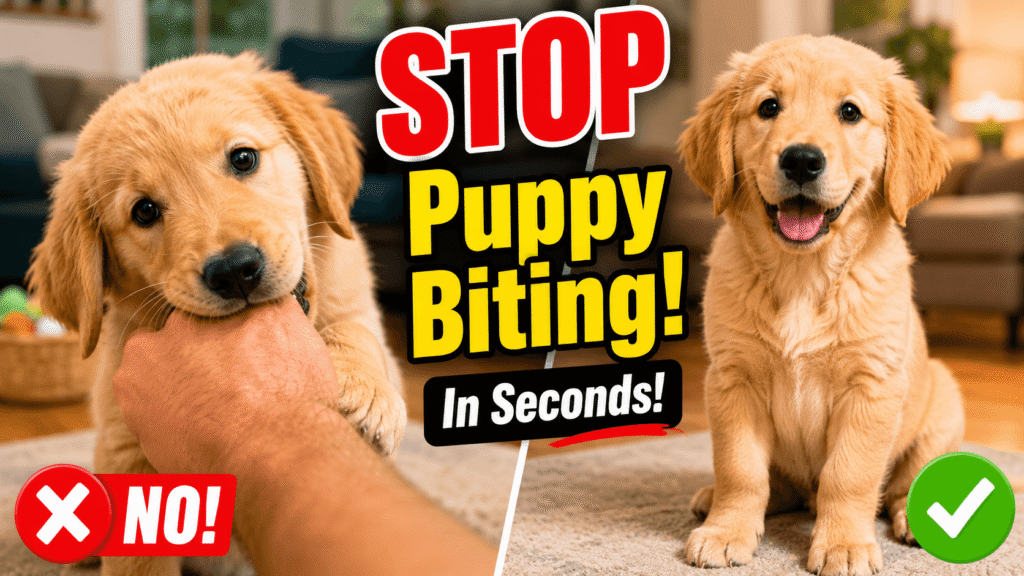
In this video, we break down EXACTLY how to stop puppy biting in seconds using proven techniques that actually work. If your puppy is constantly putting teeth on skin, nipping your hands, or turning into a little monster… this is where you fix it.
Puppy biting is one of the most common challenges new dog owners face. While those tiny teeth may seem harmless at first, constant nipping can quickly become painful and frustrating. The good news is that you can stop puppy biting in seconds by responding correctly every time your puppy bites.
In this guide, you’ll learn why puppies bite, the fastest ways to interrupt the behavior, and how to teach your puppy gentle manners using positive reinforcement.
Why Do Puppies Bite?
Biting is a completely normal part of puppy development. Puppies explore the world with their mouths, just like babies use their hands.
Common reasons include:
- Teething discomfort
- Excitement during play
- Seeking attention
- Exploring new objects
- Learning bite inhibition
Understanding the reason behind the biting helps you choose the right training method.
How to Stop Puppy Biting in Seconds
1. Stop Playing Immediately
The moment your puppy bites too hard:
- Say a calm “Ouch!”
- Stand up
- Remove your hands
- Ignore your puppy for 20–30 seconds
This teaches your puppy that biting makes the fun stop.
2. Redirect to a Chew Toy
Always keep a chew toy nearby.
When your puppy starts biting your hands, immediately offer:
- Rubber chew toys
- Puppy-safe teething toys
- Rope toys
- Frozen chew toys
Reward your puppy for chewing the toy instead.
3. Reward Gentle Behavior
Positive reinforcement works much faster than punishment.
Whenever your puppy:
- Licks instead of bites
- Plays gently
- Releases your hand
Reward with:
- Praise
- Small treats
- Toys
- Playtime
4. Stay Calm
Avoid:
- Yelling
- Hitting
- Holding your puppy’s mouth shut
These methods can create fear or make biting worse.
5. Give Your Puppy Enough Exercise
Many puppies bite because they have too much energy.
Daily exercise helps reduce unwanted behaviors through:
- Walks
- Fetch
- Training sessions
- Puzzle toys
- Mental games
A tired puppy is much less likely to bite.
Common Mistakes to Avoid
Many owners accidentally encourage biting by:
- Wrestling with their puppy
- Using hands as toys
- Inconsistently correcting biting
- Rewarding attention-seeking behavior
- Expecting instant results
Consistency is the key to success.
How Long Does It Take?
Most puppies begin showing improvement within 1–2 weeks of consistent training.
By 4–6 months, many puppies naturally bite much less as teething ends and training takes effect.
When Should You Be Concerned?
Contact your veterinarian or a certified dog trainer if your puppy:
- Shows aggressive body language
- Growls while guarding toys or food
- Bites hard enough to break skin repeatedly
- Doesn’t improve despite consistent training
Early intervention can prevent future behavioral problems.
Frequently Asked Questions
Can you really stop puppy biting in seconds?
You can interrupt the behavior immediately by ending play or redirecting your puppy to a chew toy. Long-term success requires consistent training over time.
Should I punish my puppy for biting?
No. Positive reinforcement is safer and more effective than punishment.
Is puppy biting normal?
Yes. Nearly all puppies bite during teething and while learning how to interact with people.
What age do puppies stop biting?
Most puppies significantly reduce biting between 4 and 7 months as teething ends and training progresses.
Final Thoughts
Puppy biting is a normal stage of development, but it doesn’t have to become a lasting habit. By responding immediately, redirecting your puppy to appropriate chew toys, rewarding gentle behavior, and staying consistent, you’ll help your puppy learn that gentle play is far more rewarding than biting.
Patience and consistency are the keys to raising a happy, well-mannered companion. At CathayWalk, we recommend using positive, reward-based training to build trust while teaching lifelong good behavior.